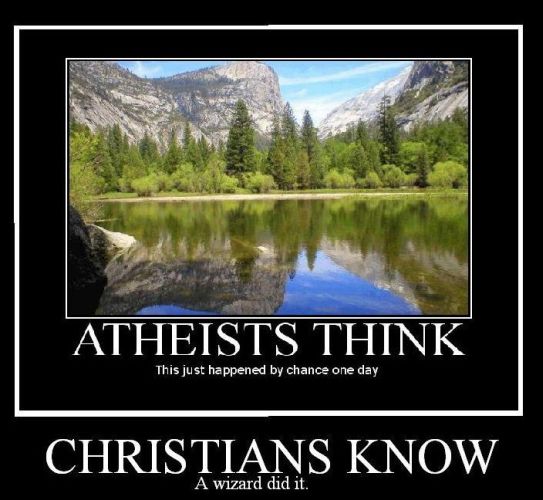
NO, America was not in any sense founded as a Christian Nation.
Most of the Founding Fathers were not Christians.
"One nation under God" and "In God We Trust" were not brought into play until the mid-1950's, under the umbrella of McCarthyism propaganda.
The establishment of organized religion was explicitly spoken AGAINST. It was intended to have no place in our government...although all citizens (including prominent political figures) were of course allowed the freedom to believe--or not--as they chose.
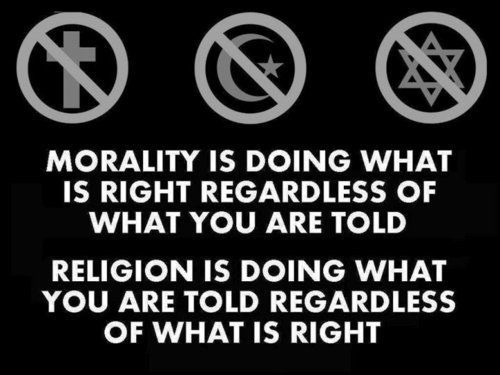
Sam Harris' brilliant TED presentation on the lack of need for religion, to maintain morality
Excerpt: "...one thing to notice is that we do something different when talking about morality -- especially secular, academic, scientist types. When talking about morality we value differences of opinion in a way that we don't in any other area of our lives. So, for instance the Dalai Lama gets up every morning meditating on compassion, and he thinks that helping other human beings is an integral component of human happiness. On the other hand we have someone like Ted Bundy: Ted Bundy was very fond of abducting and raping and torturing and killing young women.
So, we appear to have a genuine difference of opinion about how to profitably use one's time. (Laughter) Most Western intellectuals look at this situation and say, "Well, there is nothing for the Dalai Lama to be really right about -- really right about -- or for Ted Bundy to be really wrong about that admits of a real argument that potentially falls within the purview of science. He likes chocolate, he likes vanilla. There is nothing that one should be able to say to the other that should persuade the other." Notice that we don't do this in science..
On the left you have Edward Witten. He's a string theorist. If you ask the smartest physicists around who is the smartest physicist around, in my experience half of them will say Ed Witten. The other half will tell you they don't like the question. (Laughter) So, what would happen if I showed up at a physics conference and said,"String theory is bogus. It doesn't resonate with me. It's not how I chose to view the universe at a small scale. I'm not a fan." (Laughter) Well, nothing would happen because I'm not a physicist, I don't understand string theory. I'm the Ted Bundy of string theory. (Laughter) I wouldn't want to belong to any string theory club that would have me as a member..
But this is just the point. Whenever we are talking about facts certain opinions must be excluded. That is what it is to have a domain of expertise. That is what it is for knowledge to count. How have we convinced ourselves that in the moral sphere there is no such thing as moral expertise, or moral talent, or moral genius even? How have we convinced ourselves that every opinion has to count? How have we convinced ourselves that every culture has a point of view on these subjects worth considering? Does the Taliban have a point of view on physics that is worth considering? No. (Laughter) How is their ignorance any less obvious on the subject of human wellbeing? (Applause).
So, this, I think, is what the world needs now. It needs people like ourselves to admit that there are right and wrong answers to questions of human flourishing, and morality relates to that domain of facts. It is possible for individuals, and even for whole cultures to care about the wrong things: Which is to say that it's possible for them to have beliefs and desires that reliably lead to needless human suffering."
Seriously, lots of misconceptions there.
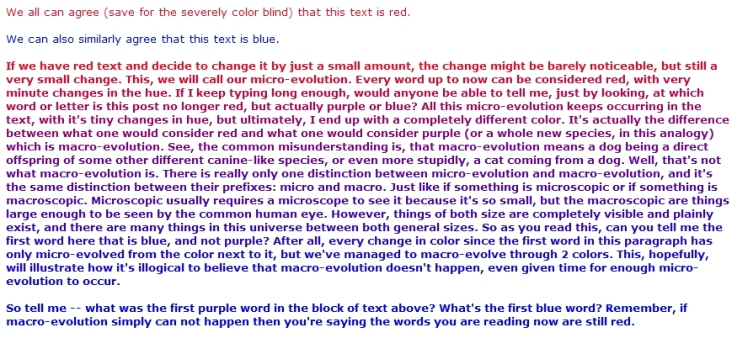
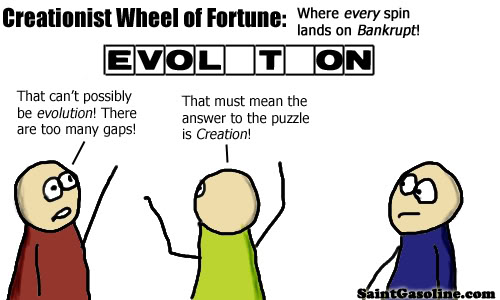
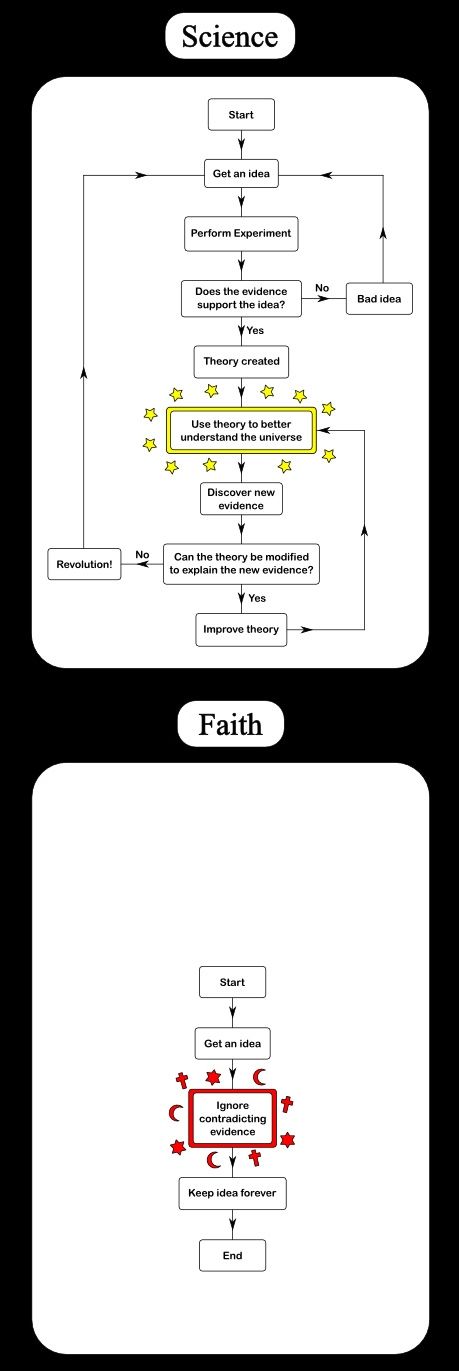
"Evolution is only a theory." -Yes. So is gravity. :-) So are the ideas that all things are made up of atoms, and the earth revolves around the sun. The scientific definition of "theory" is quite different from what is usually meant in casual conversation.
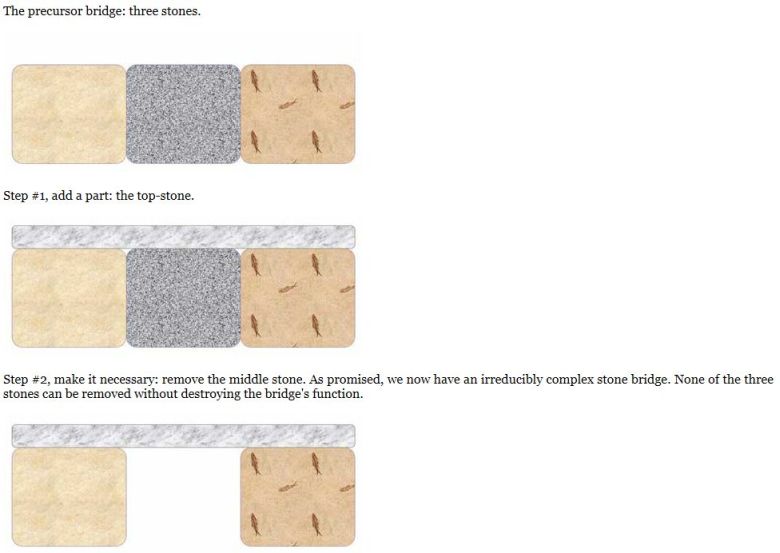
Even if intermediate stages weren't especially valuable, a two-step process (wherein redundant parts later fade away through disuse) easily explains the end result.